Tri-Lynx vs. Andersen STAX: The Case For and Against Going Premium
RVRated’s analysis is based solely on technical specifications and aggregated owner review data. This site may earn a commission on qualifying purchases.
RV leveling blocks look simple. Stack them. Level your rig. Move on. But the details are where the real decisions live: price, capacity, and how each system handles the job.
That is exactly the situation owners face when comparing Tri-Lynx Lynx Levelers and Andersen STAX.
Both level an RV. The real question: Does the premium — higher capacity, higher price — actually matter for most owners?
This article compares technical specifications, design philosophy, and aggregated owner feedback to examine what RV owners like and dislike about each system. For a broader overview of the entire leveling process, see our RV Leveling & Stabilization Setup Guide.
The Bottom Line
Tri-Lynx Lynx Levelers are a staple. Owner data shows three things: affordable, simple, and proven over years of use across every RV type.
Andersen STAX aims higher. Extreme load capacity. Modular, with a build that targets large rigs and owners who want margin.
The data is clear. Both systems do the job. The choice: budget, rig weight, and whether that extra margin is worth the premium for you.
Why Capacity Numbers Can Be Misleading
One of the first specifications owners notice when shopping for RV leveling blocks is load capacity.
Tri-Lynx Lynx Levelers are rated for 40,000 pounds per stack. Andersen STAX carries a published capacity of 120,000 pounds — three times higher. At first glance, the difference appears enormous.
However, owner discussions frequently raise a practical question: how much capacity does a typical RV actually require?
Most travel trailers weigh significantly less than 15,000 pounds. Many Class C motorhomes fall well below 20,000 pounds. Even many fifth wheels remain comfortably below the published limits of standard leveling block systems.
Higher capacity isn’t meaningless. It buys margin, especially for heavy rigs and diesel pushers. But numbers alone don’t tell the whole story. Day-to-day, stability, ease, and durability often matter more than a spec sheet.
Tri-Lynx Corporation Lynx Levelers Overview
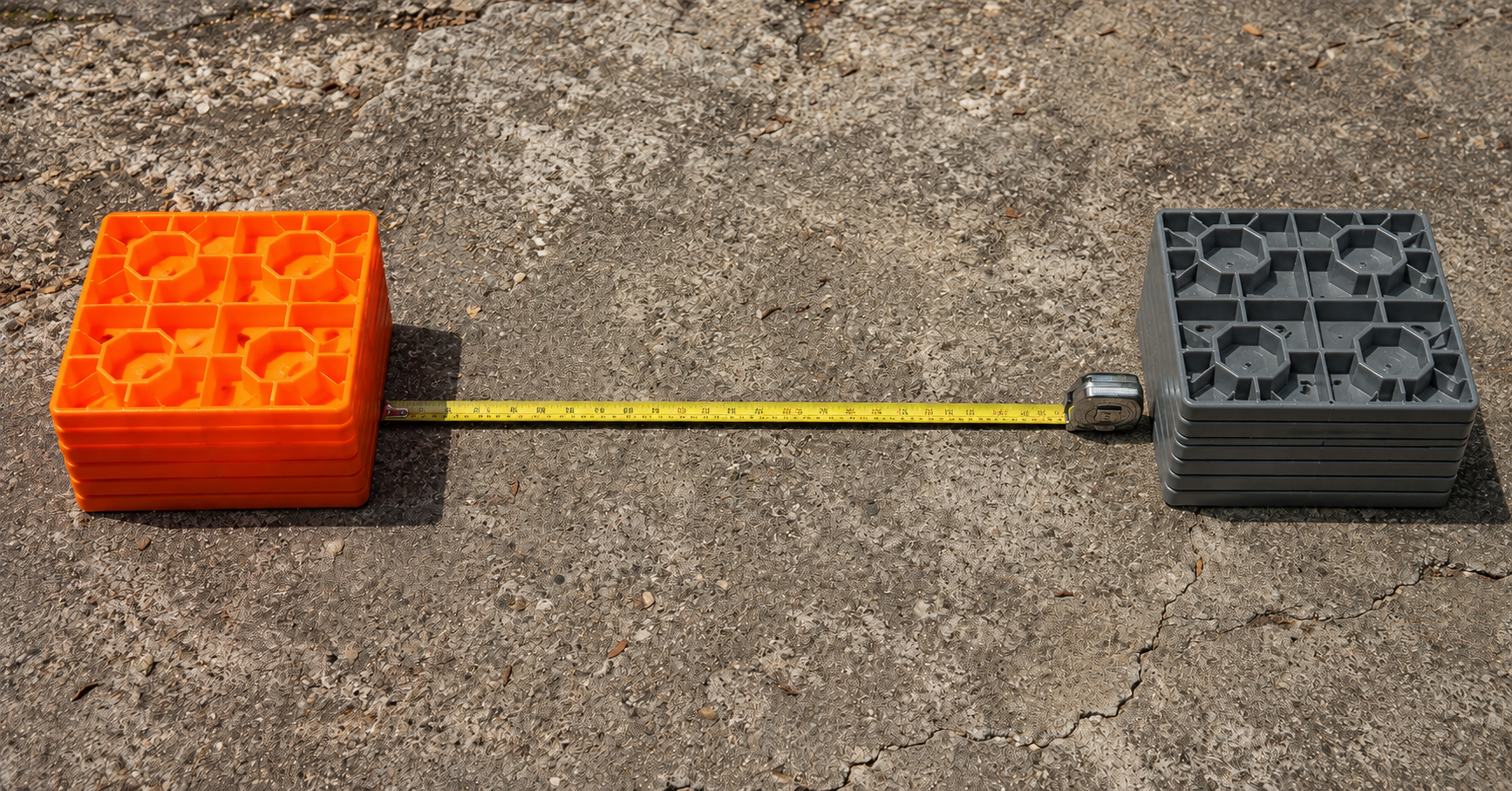
Tri-Lynx Corporation has manufactured the Lynx Levelers in Irving, TX since 1992 — one of the longest-established RV leveling block products on the market. The design uses square interlocking blocks with a triangular grip pattern that can be stacked into multiple configurations depending on campsite conditions.
Confirmed Specifications [1][5]
40,000 lbs per stack
UV-stabilized copolymer resin
8.5″ × 8.5″ × 1.5″
~1″ per block
10 blocks + nylon bag
10 years
Made in USA since 1992
B0028PJ10K
What Owners Like
Owner feedback consistently highlights straightforward setup with minimal learning curve, affordable pricing (~$30–45 for a 10-pack), wide retail availability, and compatibility with most RV categories — travel trailers, fifth wheels, Class B, and Class C. Many owners report using the same set for multiple camping seasons without needing replacement. The 30+ year market history generates a substantial volume of long-term owner reports unavailable for newer products.
What Owners Dislike
Common complaints include cracking under unusually heavy loads, plastic fatigue after years of exposure, carrying bag wear over time, and reduced stability when stacked aggressively beyond recommended height. Most negative reviews appear associated with extreme usage scenarios rather than ordinary campground leveling.
Andersen STAX Leveling Blocks Review & Technical Data
Andersen Hitches entered the leveling market with a reputation for premium RV accessories, and STAX follows the same philosophy. The system uses heavy-duty stackable blocks designed to create larger support platforms and accommodate substantially higher load ratings than standard leveling block systems.
Confirmed Specifications [3][4]
120,000 lbs per stack
Not disclosed by manufacturer
Not disclosed by manufacturer
1″–6″ configurable
10 blocks + Rapid-Lock handle
Lifetime (97-Year H.I.T.C.H.E.D)
Andersen does not publish specific material composition or individual block dimensions for the STAX system. All listed specs are confirmed from official sources.
What Owners Like
Owner feedback frequently highlights extremely robust construction, the 120,000 lb capacity rating (3× higher than standard RV leveling blocks), a stable footprint under heavy loads, the Rapid-Lock handle for organized storage and quick deployment, and the lifetime warranty for long-term confidence.
What Owners Dislike
Recurring complaints include higher purchase price (~$80–120 for a 10-pack), a larger storage footprint than standard blocks, and — noted by several owners — potential overkill for smaller RVs. Owner reports suggest that for rigs under 15,000 lbs, the practical performance difference between STAX and standard blocks is minimal.
Head-to-Head Comparison
| Feature | Tri-Lynx 00015 | Andersen STAX 3636 |
|---|---|---|
| Weight Capacity | 40,000 lbs (stack) | 120,000 lbs (stack) |
| Material | UV-stabilized copolymer resin | Not disclosed by manufacturer |
| Block Size | 8.5″ × 8.5″ × 1.5″ | Not disclosed by manufacturer |
| Height Increment | ~1″ per block | 1″–6″ configurable |
| Kit Contents | 10 interlocking blocks + nylon bag | 10 stackable blocks + Rapid-Lock handle |
| Warranty | 10 years | Lifetime (97-Year H.I.T.C.H.E.D) |
| Price Range | ~$30–45 (10-pack) | ~$80–120 (10-pack) |
| Best For | Travel trailers, Class C, fifth wheels — owners prioritizing value and compact storage | Class A, Super C, heavy fifth wheels — owners prioritizing maximum capacity and lifetime warranty |
The Case For Going Premium
For Class A, Super C, and heavy fifth wheels, the STAX capacity margin is real — not just marketing.
A fully loaded Class A diesel pusher can exceed 40,000 pounds GVWR. The 120,000-pound rating provides a 3× safety margin that becomes relevant when tires settle into soft ground or when one side of a dual-axle setup carries disproportionate weight.
The lifetime warranty changes the long-term math too. Tri-Lynx covers 10 years. STAX carries a lifetime replacement guarantee — relevant for full-timers and frequent campers who want to buy once.
Owners who want fast setup and organized storage cite the Rapid-Lock handle as a genuine upgrade.
The Case Against Going Premium
For lighter rigs — travel trailers, vans, most Class Cs — the STAX capacity is just excess. No practical gain in real-world use.
Most travel trailers weigh significantly less than 15,000 pounds. Many Class C motorhomes fall well below 20,000 pounds. Even many fifth wheels remain comfortably within the 40,000-pound limits of standard RV leveling blocks.
The price difference is substantial. A 10-pack of Tri-Lynx typically costs $30–45. The equivalent STAX kit runs $80–120 — a 2.5× premium for capacity that will never be tested by most rigs.
For rigs under 15,000 lbs, owner data shows little difference in satisfaction. Both level. Both hold up. The premium buys peace of mind, not better results.
Common Owner Complaints
Cracking
Both products receive occasional reports of cracking. These incidents most commonly appear when blocks are overloaded, improperly stacked, or used on unstable surfaces.
Storage Challenges
Storage concerns appear more frequently in Andersen STAX reviews due to the larger size of individual components.
Carrying Bag Durability
Bag-related complaints appear throughout the RV leveling blocks category regardless of manufacturer. Tri-Lynx owners report zipper and handle wear after extended use.
Surface Conditions
Owners occasionally report reduced grip on wet pavement or compacted gravel. Proper placement significantly reduces these issues.
Complete Your RV Leveling & Stabilization Setup
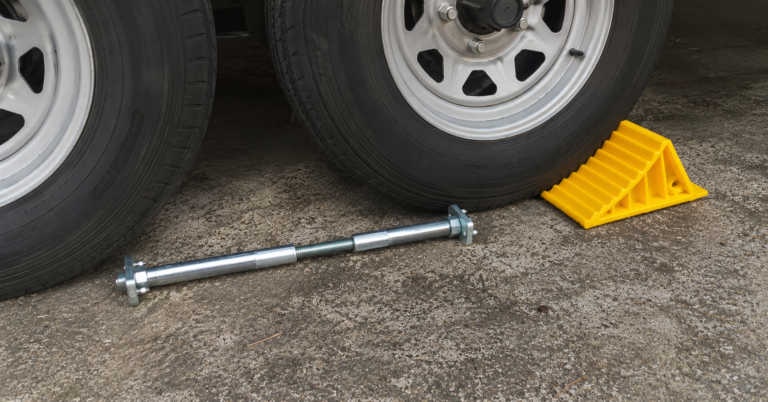
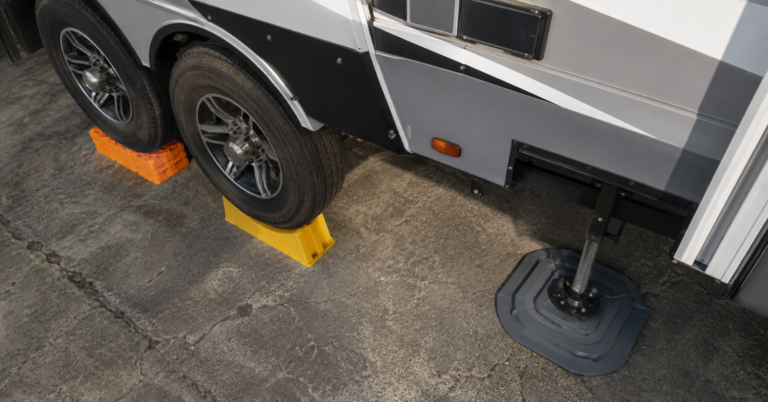
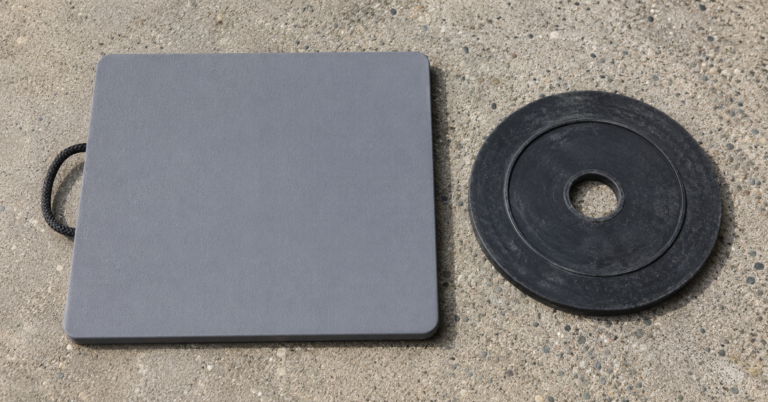
Leveling blocks are just one piece. The data is blunt: stability comes from pairing blocks with chocks and jack pads.
Frequently Asked Questions
Are Tri-Lynx RV leveling blocks strong enough for most RVs?
Owner reports suggest Tri-Lynx provides sufficient capacity for most travel trailers, Class C motorhomes, and many fifth-wheel setups. The 40,000 lb rating covers the majority of RVs on the road today.
What makes Andersen STAX different from standard leveling blocks?
The primary differences are the 120,000 lb capacity rating (3× higher than Tri-Lynx Lynx Levelers), the Rapid-Lock handle system, and a lifetime warranty versus Tri-Lynx’s 10-year coverage.
Does higher capacity automatically mean better performance?
Not for most RV owners. Capacity represents one factor among stability, usability, storage, durability, and price. For rigs under 15,000 lbs, owner satisfaction trends show minimal difference between the two systems.
Is Andersen STAX worth the extra cost?
Owner feedback is mixed. Owners of heavy Class A rigs and full-timers frequently justify the premium. Owners of travel trailers and Class C motorhomes more commonly report Tri-Lynx as sufficient for their needs.
Which RV leveling blocks system is easier to store?
Tri-Lynx requires less storage space and receives more positive feedback regarding compactness and carrying bag convenience.
Sources
- [1] Tri-Lynx Corporation — Lynx Levelers 00015 Official Specifications — camperid.com
- [2] Tri-Lynx Corporation — Official Site — trilynx.com
- [3] Andersen Hitches — STAX Leveling Blocks Official Product Page — andersenhitches.com
- [4] Tweety’s — Andersen 3636 STAX Leveling Blocks — tweetys.com
- [5] Hann RV — Lynx Levelers 00015 Tri-Lynx RV Leveling Kit — hannarv.com
- [6] Amazon — Tri-Lynx Lynx Levelers 00015 10 Pack (ASIN: B0028PJ10K) — amazon.com