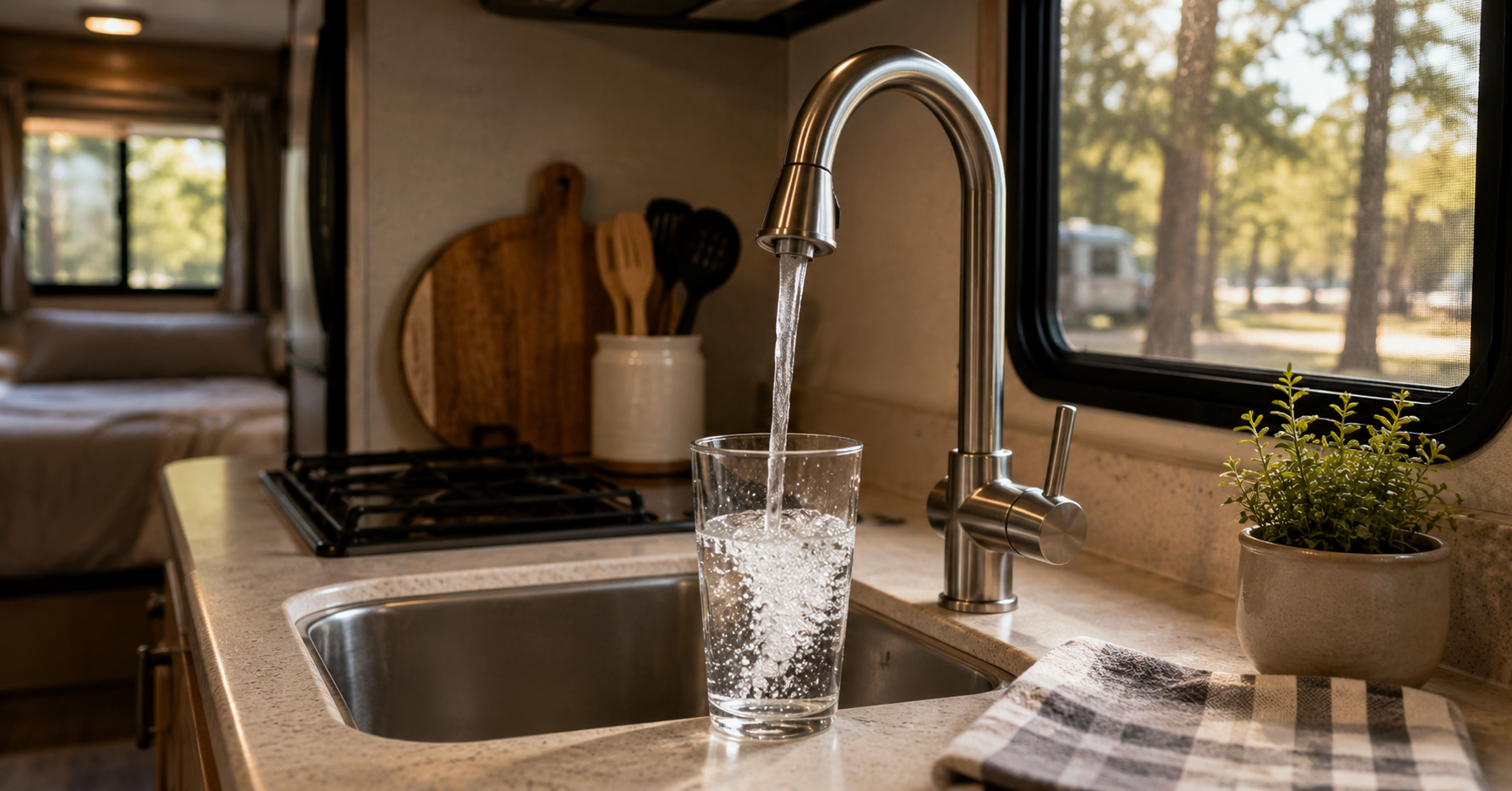
Is Your RV Kitchen Sink Water Safe to Drink? The Honest Answer for Full-Timers
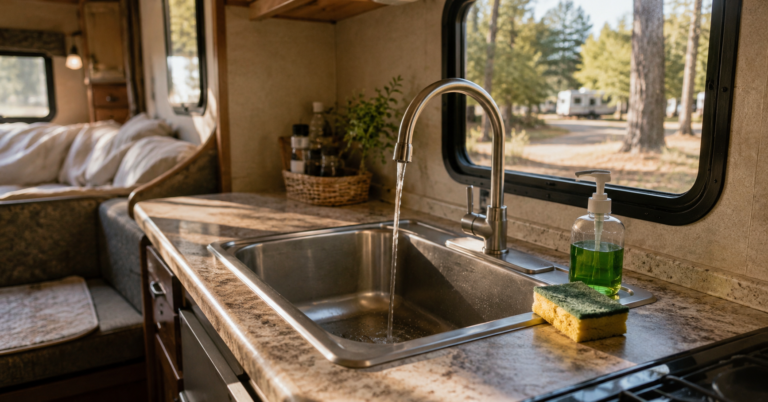
You’re standing at the kitchen sink filling a glass.
The water looks clear.
It doesn’t smell strange.
You’ve been connected to campground water for weeks.
Then the thought hits:
Is RV kitchen sink water safe to drink?
The honest answer is that it depends less on the campground, more on what happened between the campground spigot and your faucet.
The water entering your RV may be perfectly safe. The problem is that it still has to pass through your hose, fresh water tank, pump, plumbing lines, and fixtures before it reaches your glass.
Every piece in the chain can protect water—or compromise it.
Data points to a clear culprit. Most RV water problems don’t start at the source. They start inside the system.
The Tap Water Truth: Is RV Water Safe at Campground Pedestals?
Many RV owners picture campground water as a direct line from the utility system to the kitchen faucet.
That’s not how most RV plumbing systems work.
The typical path looks like this:
Campground water source → hose → fresh water tank → pump → plumbing lines → faucet
Each step is another chance for something to go wrong.
Municipal water entering a campground often meets drinking-water standards before it reaches the pedestal — but not always. Many campgrounds operate as Transient Non-Community Water Systems and are not subject to the same EPA regulations as municipal systems. Water quality at the pedestal can vary significantly by location.
Once water’s inside, the system—not the source—calls the shots.
A clean tank, sanitized lines, quality hoses, and regular maintenance help preserve water quality.
An RV that sits for months with stagnant water can create a very different situation.
That’s why two RVs connected to the same campground spigot may have completely different drinking-water experiences. One owner fills a glass without concern. The other notices odors, bad taste, or cloudy water. The difference usually comes from what happened inside the RV.
The 4 Risk Factors Limiting RV Fresh Water Tank Drinking Water Safety
Not every risk matters equally.
Some are minor annoyances. Others can undermine the quality of every gallon flowing through the coach.
| Risk Factor | What Goes Wrong | Risk Level |
|---|---|---|
| Fresh Water Tank | Biofilm, sediment, stagnant water buildup during storage | High |
| Water Lines | Plastic off-gassing (older lines), sediment accumulation | Medium |
| Campground Hookup | Water quality varies by location, pressure fluctuations | Medium |
| Last Sanitization Date | Most owners skip or delay — contaminants accumulate undetected | High |
Risk assessment based on aggregated owner reports and manufacturer maintenance guidelines.
Looking at those risk factors in practical terms, four patterns show up repeatedly among long-term RV owners.
Storage: The Quickest Way to Trouble
Water that remains inside a tank for extended periods stops behaving like fresh water.
Heat accelerates the process. So does inactivity.
An RV sitting in summer temperatures for several weeks creates conditions that allow odors, biofilm, and contamination risks to increase significantly.
EPA research confirms that biofilm in stagnant water systems can harbor pathogens including Legionella and E. coli — and that the same mechanisms apply to any small-scale water system, including RV tanks.
Hoses: The Overlooked Weak Link
A drinking-water-safe hose does more than prevent weird plastic taste.
It’s designed specifically for potable water use.
Standard garden hoses may introduce unwanted chemicals, odors, or taste issues that become noticeable after only a few days of use.
Filters: Not a Cure-All
A filter improves water quality.
A filter does not magically fix a neglected water system.
If contamination already exists inside the tank or plumbing lines, filtration alone may not solve the problem. This becomes important because many owners focus on replacing filters while ignoring the tank itself.
Heat: Multiplier of Risk
Warm environments make nearly every water-quality issue worse.
Water stored in a cool climate behaves differently than water sitting inside an RV exposed to direct summer sun for weeks at a time.
Full-timers traveling through southern states during peak summer conditions often face a greater need for maintenance than weekend campers in cooler regions.
What RV Owners Really Do to Keep RV Tap Water Safe to Drink
RV owners don’t all handle drinking water the same way.
Review patterns reveal four common approaches.
Group 1: Filter and Drink
These owners use campground water, run it through a filtration system, maintain their plumbing system regularly, and drink directly from the kitchen faucet. They generally report confidence in their water quality as long as maintenance stays consistent.
Group 2: Faucet for Cooking, Bottled Water for Drinking
This may be the most common middle-ground approach. The kitchen sink water gets used for coffee, cooking, washing produce, and brushing teeth. Drinking water comes from bottles or separate dispensers. Many owners choose this route because it feels simple rather than because they experienced a specific water-quality problem.
Group 3: Multi-Stage Filtration
Long-term travelers often add multiple layers of filtration. The goal isn’t just better taste — it’s reducing sediment, chlorine, and other contaminants before water reaches the tank and faucet. Owner reports indicate this approach is especially popular among full-timers who spend months moving between different campground systems.
Group 4: Tank Maintenance First
A smaller but highly vocal group focuses less on filtration and more on sanitation. Their argument is straightforward: if the tank and plumbing system are clean, many water-quality concerns become easier to manage. These owners often spend more time discussing sanitization schedules than filter specifications. That pattern appears repeatedly across RV forums and owner discussions.
The One Rule That Matters for an RV Water Filter Kitchen Sink Setup
Industry practice recommends sanitizing the fresh water tank every six months and after any storage period.
Not every year. Not when it starts smelling bad. Not when the water tastes strange.
Every six months. And every time the RV sits unused long enough for water to stagnate.
This is where the process goes backward for many owners. They replace filters. They buy bottled water. They add accessories. Meanwhile, the tank sits—unsanitized for two years.
No filter can compensate for contamination already growing inside the fresh water system.
Owner feedback suggests that recurring taste and odor complaints often trace back to skipped sanitization rather than failed filtration equipment.
A properly maintained tank gives every other part of the water system a chance to work as intended. Neglect the tank, and everything downstream suffers.
That’s why sanitization remains the single most important maintenance task for RV drinking water.
Brand-New RVs: Not Always Clean
Many buyers assume a factory-fresh RV automatically has safe drinking water. That’s not always true.
New plumbing components can contain manufacturing residues, installation debris, or odors from storage and transportation.
A new RV may benefit from an initial tank sanitization before regular use. This doesn’t mean the water is dangerous. It simply means “new” and “ready for drinking” are not always the same thing.
When to Stop Drinking the Water
Certain warning signs deserve immediate attention. Stop using faucet water for drinking until the system has been inspected if you notice:
- Strong sulfur or rotten-egg odors
- Visible discoloration
- Cloudy water
- Unusual sediment
- Persistent bad taste
- Long periods of stagnant storage
- Evidence of tank contamination
These symptoms don’t automatically indicate a serious problem. They do indicate that something changed. And when drinking water changes unexpectedly, it’s worth finding out why.
The Bottom Line
Is RV kitchen sink water safe to drink?
Sometimes. Not always.
Maintenance determines the answer, not the RV.
A clean fresh water tank, sanitized plumbing system, potable-water hose, and consistent filtration can provide water that many RV owners drink every day without concern.
A neglected tank with months-old water can create problems regardless of how expensive the filtration system might be.
The mistake isn’t trusting the water. The mistake is assuming water stays safe without maintaining the system that carries it.
Frequently Asked Questions
More From the RV Kitchen Guide